Affiliate disclosure: some links may become affiliate links after program approval. Commission rate never determines our ranking.
Tech stack guide
Insurance Agent Tech Stack 2026: CRM, AMS, Calling & Automation
The best stack is not the one with the most features. It is the one with clear ownership and clean handoffs.
Core idea: A useful tech stack is modular. Let CRM own leads and activity. Let AMS own policy operations. Add communications and automation only where they remove a measurable bottleneck.
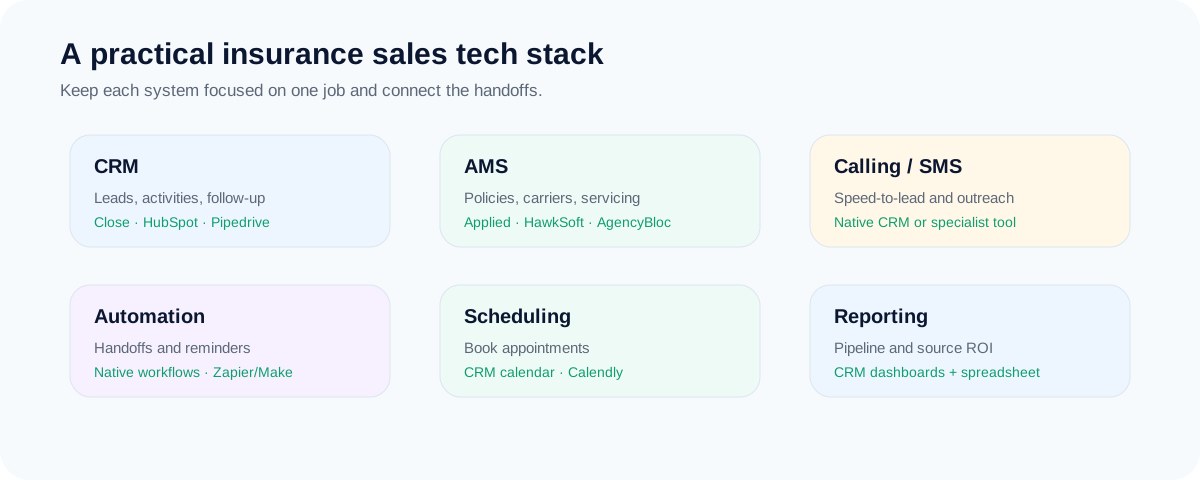
The six layers
- CRM: leads, sales activity and pipeline.
- AMS: policies, carriers and servicing.
- Calling/SMS: speed-to-lead and outreach.
- Automation: reminders and cross-system handoffs.
- Scheduling: appointment booking.
- Reporting: source ROI, conversion and producer activity.
Three expensive mistakes
- Buying an all-in-one platform before defining the workflow.
- Duplicating policy data across CRM and AMS with no source-of-truth rule.
- Adding automation before producers consistently use the basic pipeline.
Build order
Start with CRM + AMS roles, then add calling, scheduling and automation around specific bottlenecks. The result is usually cheaper and easier to manage than a giant platform with unused modules.
Where affiliate monetization fits
This publication can monetize CRM, marketing automation, scheduling and adjacent SaaS. Insurance-specific AMS vendors may have different partner structures, so those pages should remain editorially useful even when no affiliate payout exists.