Best CRM for Insurance Agents in 2026: 5 Options Compared
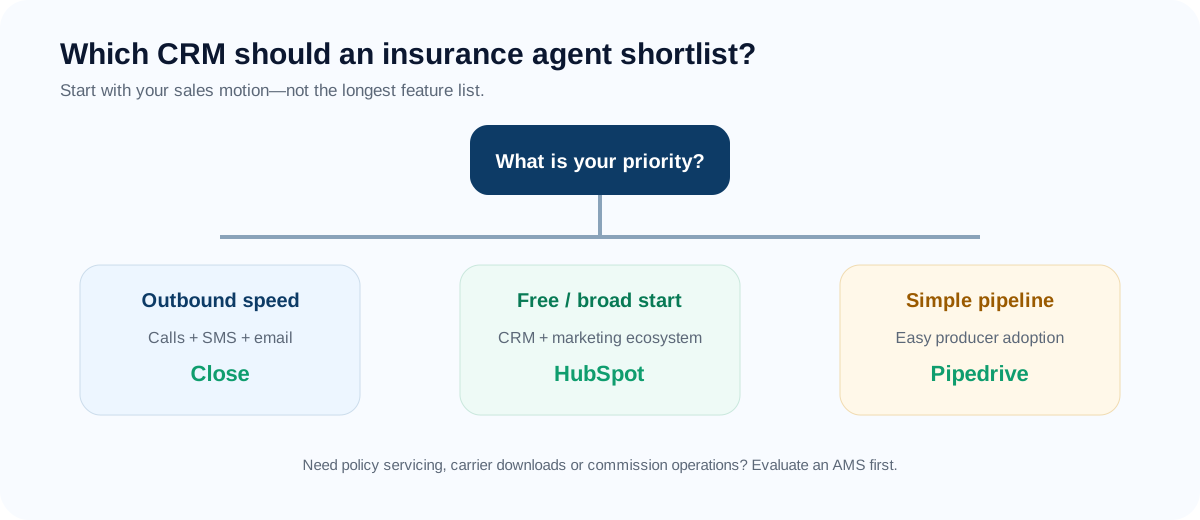
The best CRM depends on the job: acquisition, follow-up and pipeline belong in CRM; policy operations may still belong in an AMS.
Quick comparison
| Tool | Best fit | Sales strength | Insurance caveat | Affiliate economics |
|---|---|---|---|---|
| Close | Outbound-heavy agencies | Calling, SMS, email, sequences | Not a policy system | 30% up to 12 months |
| HubSpot | Free start / broad ecosystem | CRM + marketing + service | Advanced tiers get expensive | 30% up to 1 year |
| Pipedrive | Pipeline simplicity | Fast adoption, visible stages | Needs integrations for deeper insurance use | 20% year one |
| Zoho CRM | Budget + customization | Fields, automation, broad suite | More setup decisions | 15% year one |
| Salesmate | Small sales teams | Calling, sequences, quotes | Horizontal CRM, not AMS | 20% year one |
Our evaluation framework
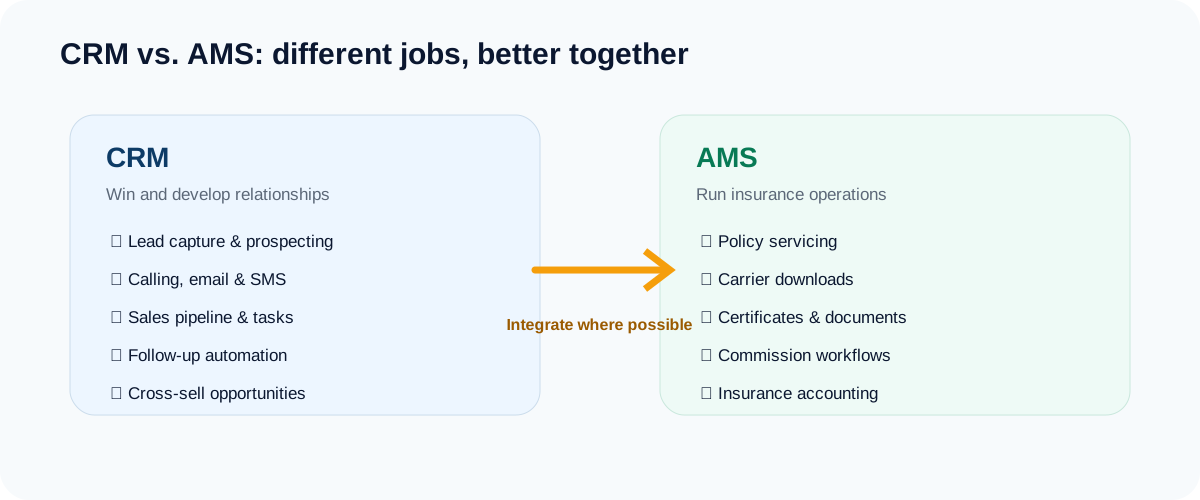
Insurance sales has two very different software jobs. The first is winning and developing relationships: capture leads, contact them quickly, manage next actions, quote, follow up and cross-sell. The second is running insurance operations: policies, carrier data, certificates, commissions, servicing and accounting. A CRM can excel at the first while being the wrong tool for the second.
1. Close — best for outbound-heavy teams
Close is a strong fit when producers live in the phone, email and SMS queue. Its product is designed around sales activity, which reduces the need to stitch a separate dialer onto a basic contact database. That matters for agencies buying leads or running consistent outbound sequences.
Close
- Speed-to-lead and call volume matter
- You want sales communication inside the CRM
- Your AMS already handles policy operations
- You need carrier downloads or servicing workflows
- Your main motion is inbound marketing
- You want a full customer-platform ecosystem
Use the official product page to evaluate fit. The button is structured to accept an affiliate URL once the site is approved.
See Close for insurance →2. HubSpot — best free/broad starting point
HubSpot gives a small agency a credible way to move off spreadsheets with a free CRM and then expand into marketing, service and automation as needs grow. The risk is cost creep: the attraction is the ecosystem, but advanced automation and larger packages can quickly become a materially bigger software decision.
3. Pipedrive — best for pipeline simplicity
Pipedrive works well when producer adoption is the biggest obstacle. Its value proposition is not insurance-specific depth; it is making the sales process obvious enough that a team actually uses the CRM every day.
4. Zoho CRM — best for flexible lower-cost setups
Zoho rewards teams willing to define custom fields, workflows and dashboards. It can be attractive for an agency that wants more flexibility than a bare-bones CRM without jumping straight to enterprise pricing.
5. Salesmate — best value for a small sales team that wants more built in
Salesmate’s current Basic plan starts at $23 per user per month and includes contact/company management, deal pipelines, email sync, templates, tracking, meeting scheduling, web forms and custom fields. Its Pro plan adds sequences and product/quote management. That makes it a useful comparison point for small agencies that want more sales functionality before moving to a larger platform.
How to choose in 10 minutes
FAQ
What is the best CRM for insurance agents?
The right answer depends on sales motion. Close is strongest for outbound-heavy teams in this shortlist; HubSpot is the easiest free/broad entry point; Pipedrive emphasizes pipeline simplicity; Zoho emphasizes flexibility; Salesmate sits between simple pipeline CRM and all-in-one sales tool.
Can CRM replace an AMS?
Usually not if the agency depends on policy servicing, carrier downloads, insurance accounting, certificates or commission workflows. Many agencies benefit from a CRM + AMS architecture instead.
Should an independent agent start free?
Yes if the immediate goal is better follow-up discipline. The most important thing is clean data, a simple pipeline and a clear path to export or migrate later.
Primary sources & verification
Product facts below are based on current vendor documentation. Pricing and affiliate terms can change.